
Article6 min read
AI that acts in time: five lessons for the pharma supply chain
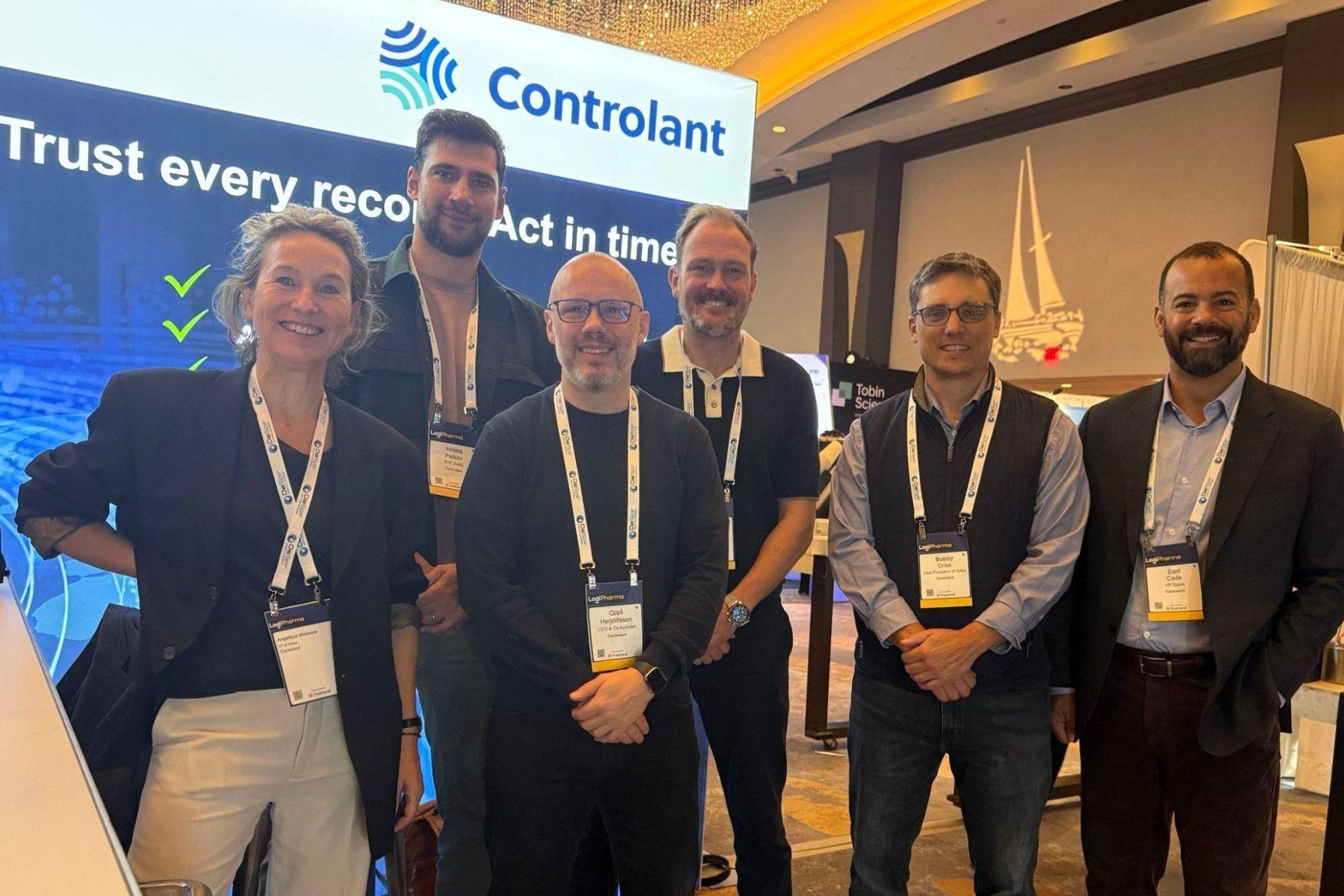
Agentic AI filled the agenda at LogiPharma in Boston in October, but the bigger message was that most supply chains can now see a problem, while few can act on it in time.
On this page
AI appeared in most of the keynote titles at LogiPharma US. Pharma leaders described agents that assess sites, tune safety stock, and flag batch risks, while technology providers described agentic operating models and control towers.
The idea connecting the sessions was that visibility is well established, but the industry now needs to turn signals into decisions while good options still exist, across a network of partners who do not share one system.
Here are five takeaways from the pharma and industry speakers, and our take on what they mean for teams moving temperature-sensitive medicines.
1. Visibility is now the baseline. It’s the intervention window that counts.
One supply chain executive gave this example: inventory might cover weeks of demand, but the best option to fix a looming supply risk might disappear in days.
In another presentation, the same point was made from the perspective of a technology provider: many companies have improved visibility, but few can act on what they see in real time. Delays are still found by email, days after they happen, and each next step runs as its own manual cycle.
In the cold chain, the window is often measured in hours. A temperature excursion found when a shipment arrives is a record of possible product loss to investigate. The same excursion found in transit, while the shipment sits on a tarmac or at a handover, is a decision someone can still make: to re-ice, reroute, or hold.
“Data is only valuable if you can act on it. When a shipment is at risk, our average response time is under 15 minutes, early enough to step in and protect the product. And with no data gaps to investigate after delivery, teams can release product faster.”
 Angelique BinkhorstVP Sales, Controlant
2. AI earns trust one decision at a time
Amid a lot of talk about AI’s transformative possibilities, pharma speakers were candid about what slows it down. One keynote summed up the problem as many pilots on several platforms, with few decisions changed. Their advice was to start an agent on one task, not a system-wide transformation.
Three principles came up repeatedly:
- Match autonomy to the type of decision
- Low-risk, reversible decisions can be automated within guardrails and without making the system vulnerable. Decisions that touch quality or patients stay with an accountable person.
- In GxP, trust needs a trail
- GxP requires every action that affects product quality to be documented, and AI agents are held to the same standard. As one presenter put it, no audit trail means no agent.
- Adoption is a process change
- One panelist shared that an AI agent sharply improved the accuracy of complaint routing, but because teams had not committed to working differently, the expected time savings never arrived.
“The best first candidates are decisions that already follow rules and repeat at volume.”
 Carsten LützhøftChief Commercial Officer, Controlant
Shipment release is a good example. If temperature data is complete, validated, and within limits, reviewing it by hand adds time without adding judgment. With Controlant, pharma companies are reducing the manual evaluation of temperature records, in one case going from 1 in 10 shipments checked by hand, to 1 in 200. People can then focus on the exceptions that need them.
The same pattern was described by many of the speakers: automate the routine decision, keep the consequential one human, and make every step auditable.
3. The external network is now part of the enterprise
Life sciences supply chains are increasingly executed by partners: contract manufacturers, API suppliers, 3PLs, and airlines. A technology provider described them as run by partners rather than controlled in house.
A biologics supply chain leader argued that rather than focusing on improving vendor management, complex therapies need a new partnership model. By connecting contract manufacturers’ orders, inventory, and batch data directly into your own planning systems, you replace spreadsheet exchange with shared data.
Other sessions showed there is still far to go. One noted that logistics and distribution partners are rarely invited into S&OP meetings, even though they carry the plan.
Accountability is easier when every party works from the same facts. In temperature-controlled logistics, sponsors, contract manufacturers, and logistics providers often keep separate records and do not fully trust each other’s. A single validated record of what happened to a shipment, shared in real time with each party that needs it, turns a dispute into a conversation. It also gives the performance discussion at renewal something objective to rest on.
“That resonates with us because it’s the thinking behind Controlant’s API-first, device- and data-agnostic approach. The data should move with the product, across company boundaries, rather than stay with whoever owns the device.”
 Gísli HerjólfssonCEO, Controlant
4. Data must be built for decisions
AI was the headline act, but data was the supporting act that made the show possible. One pharma speaker estimated that half of the data agents need still lives in PDFs and, even worse, in people’s heads. Likewise, a life sciences supplier showed that certificates of analysis still travel mostly as paper or PDF, and called for structured, standards-based exchange instead.
A pharma transport provider commented that of all the records a customer needs from a carrier, only GPS and driver logs typically arrive in real time. Corrective actions and validation records come as emailed PDFs, reefer temperatures as spreadsheets, and security alerts by phone.
Speakers did not fully agree on what to do first, but several showed the payoff of standardizing a single source of truth before adding AI. Even without perfect data everywhere, you need trustworthy data where the decision is made.
For temperature data, that means a few practical things:
- It arrives structured, not as a PDF to retype or forward.
- It flows into ERP, quality, and transport systems through validated APIs.
- The compliance report is generated automatically when the shipment completes, ready for release.
- It lives on a GxP-validated platform, validated to comply with FDA 21 CFR Part 11 and EU GMP Annex 11.
This adds up to a foundation that makes the newer technology useful.
5. In the cold chain, more data is only useful if it leads to a decision
A packaging keynote framed the shift well: beyond temperature control, the real challenge is managing complexity, as biologics and cell and gene therapies grow, home delivery expands, and sustainability and regulatory expectations rise. Most cold chain failures happen between processes, at handovers, loading docks, and tarmacs, rather than inside the box.
A distribution quality leader from a biotech company shared a story many quality teams will recognize. Adding more temperature monitoring devices produced more data on minor excursions, often from tarmac time or loading. More data meant more nonconformance records, more investigations, and slower release to market. Their team responded by adopting mean kinetic temperature (MKT) for minor transport excursions, guided by health authority guidance and internal stability data, with a clear decision table for triage. Release got faster, and the number of nonconformance records fell.
The lesson is not to monitor less, but that monitoring needs to come with decision rules, so that data enables efficiency rather than adding to QA workload.
Other sessions looked at the cold chain as a designed system. That design also includes what travels with the product. Reusable, real-time devices, with return logistics, calibration, and servicing handled as a managed service, remove both single-use waste and an operational burden from the shipper. When Controlant handles returns, 93.6% of reusable devices come back.
Looking ahead to 2027
The sessions pointed to a practical agenda for the year ahead, echoing this recommendation from our 2026 whitepaper, From real-time data to real intelligence (opens in a new tab):
“Find a high-value use case. Begin with a narrow, high-value use case such as a daily risk brief for a specific trade corridor, or packaging optimization on a defined set of lanes, and measure outcomes rigorously against the status quo.”
In other words, be selective and invest only in AI that shortens the time between a signal and a good decision.
To get started, here are three questions worth taking to your team:
- Which decision in your supply chain loses the most options while waiting for a person to see it?
- Do your contract manufacturers and logistics partners work from the same record of what happened to a shipment as you do?
- Does your temperature data reduce QA workload or add to it?
Contact us to discuss how Controlant can help you act on shipment data while there’s still time to protect the product.
More articles
All insights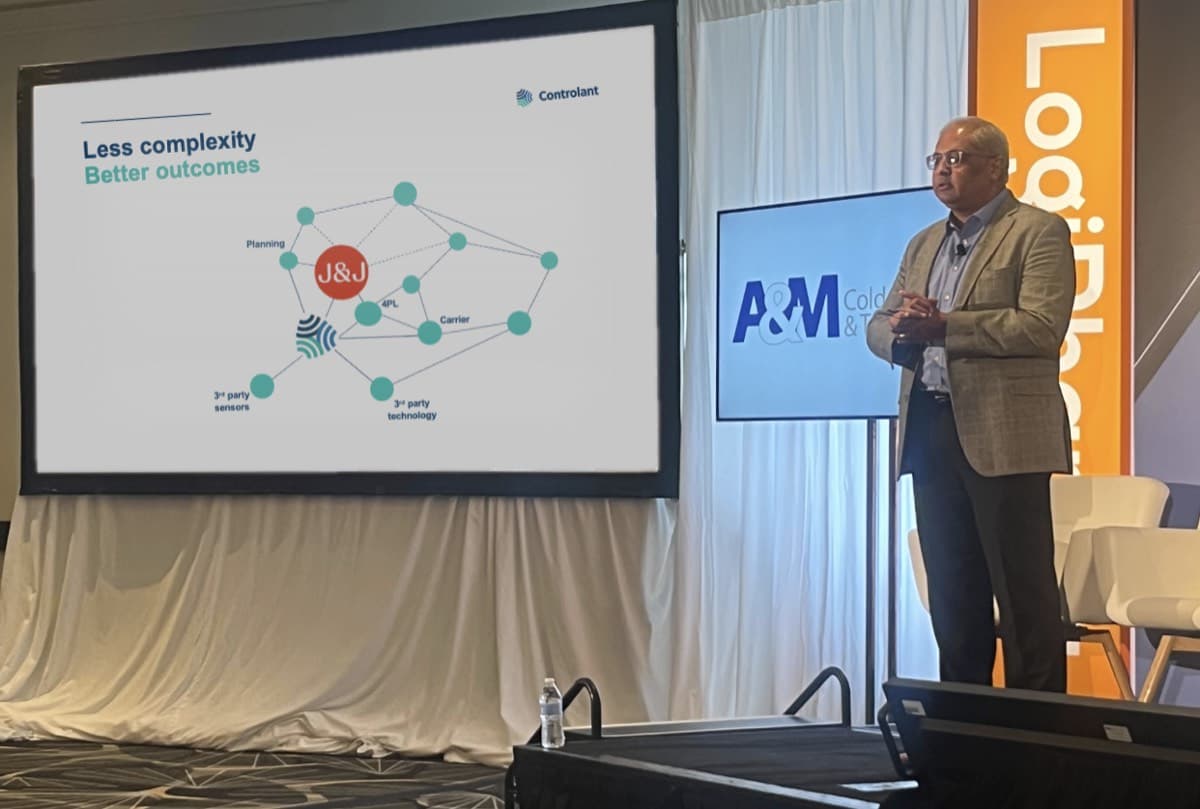
Transforming the pharma cold chain: key insights from LogiPharma US 2023
LogiPharma US 2023 concluded in Boston on 6 October, after three days of inspiring and insightful presentations and conversations. During the event, Samir Gami, Senior Director of Advanced Customer Capabilities J&J, and our CCO, Martin Thaysen, presented a keynote: Transforming the cold chain through an enterprise ecosystem.
Read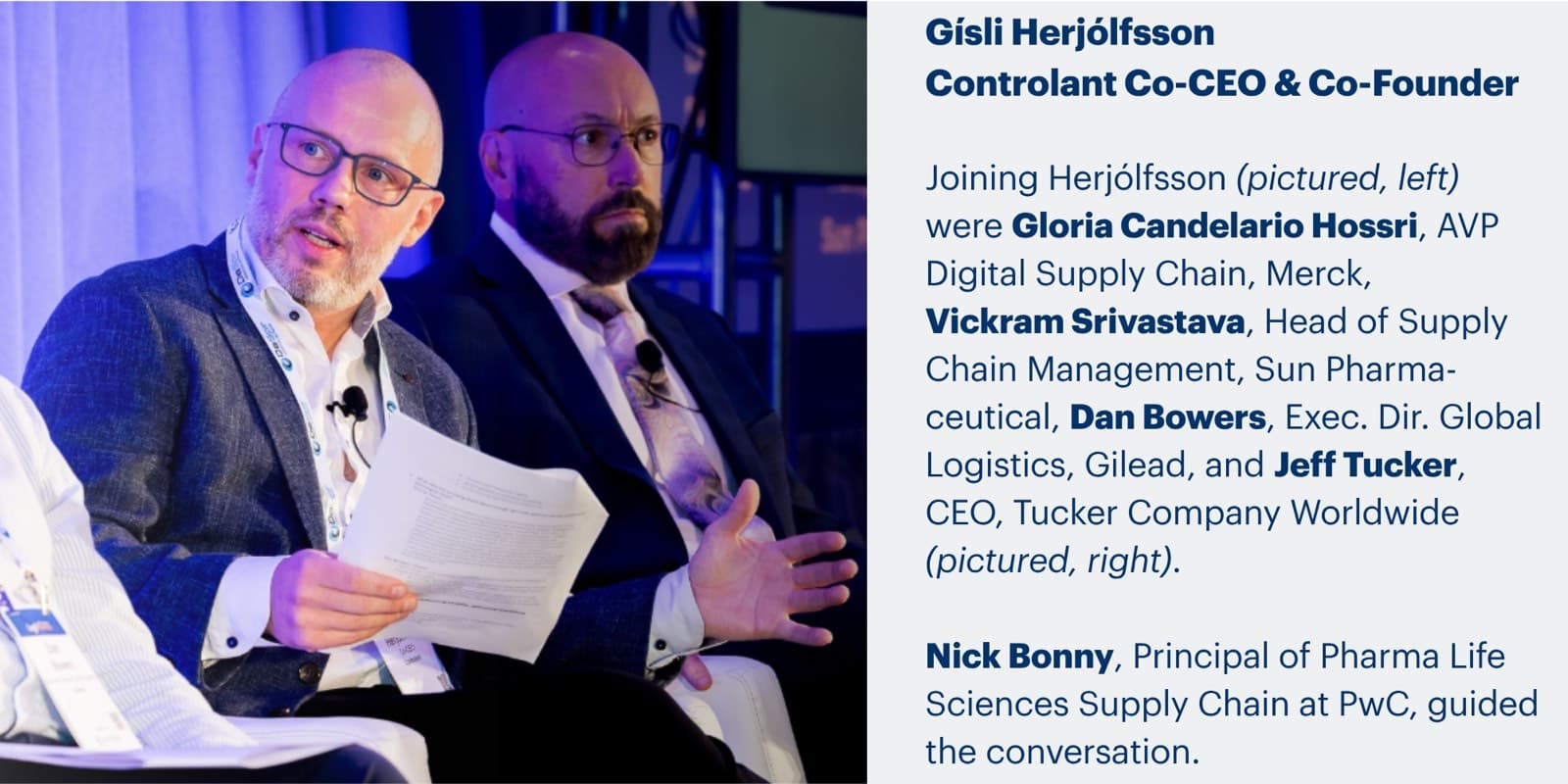
Building resilient pharma supply chains: lessons from industry leaders
Insights from the opening keynote panel for the 20th Anniversary Event of LogiPharma US, 29 September 2025
Read
What a cosmologist, a drug rescuer, and a Nobel laureate can teach the pharma supply chain
Lessons from TEDAI Vienna for the pharma supply chain: learn from every failure, enforce limits in the system, keep people on the decisions that matter, optimize for the whole chain, and feed AI data it can trust.
ReadSee what this looks like in the platform
Tell us what you ship and where, and we'll show you the platform on routes and products like yours.