
From reactive to predictive: how real-time visibility is cutting risk in the life sciences cold chain
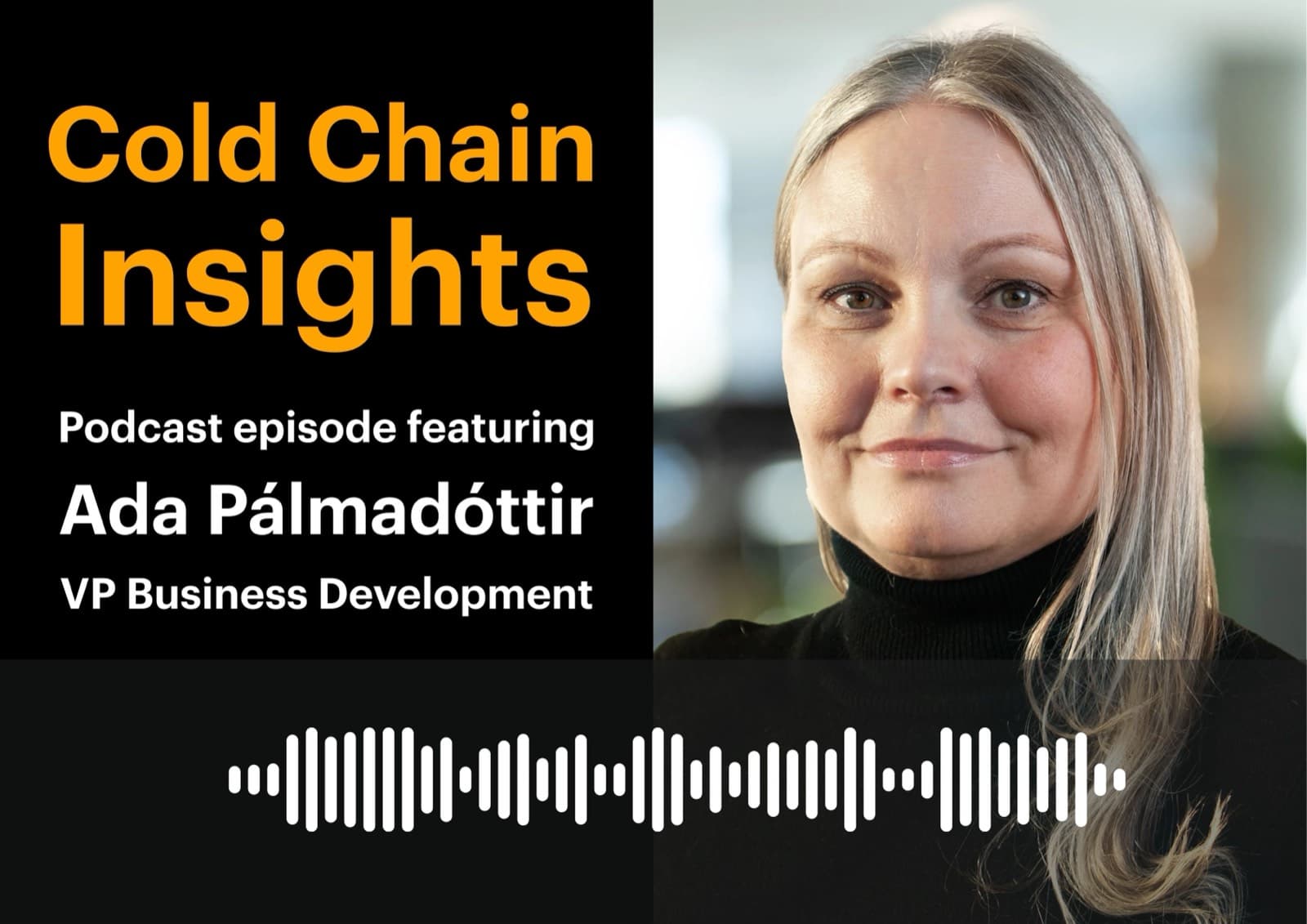
Cold Chain Insights Podcast episode featuring Adalheidur (Ada) Pálmadóttir, VP Business Development at Controlant.
What if the biggest risk to your pharmaceutical shipment isn’t a thermal failure, but an operational delay nobody caught in time?
In this new episode of Cold Chain Insights, host Thomas Hunt sits down with our VP of Business Development, Ada Pálmadóttir, for an insightful conversation that challenges some of the industry’s most entrenched assumptions about temperature monitoring, shipment visibility, and where waste really comes from.
The patient is always number one
Ada’s perspective is grounded in a single, uncompromising principle: patient safety.
“You can't add quality back once the product leaves the factory. You either protect it all the way to the patient, or you don't.”
That principle underpins everything Controlant is building, from the new Controlant Go single-use devices to a bold vision for autonomous, AI-driven cold chain execution.
From pallet-level data to product-level intelligence
When Ada talks about Saga Card, a credit-card-sized IoT device that promises to take visibility from pallet level right down to individual cartons and units, she explains the striking implications of this emerging technology: rather than quarantining an entire pallet because of a single external device reading, pharma companies can pinpoint exactly which cartons are affected and release the rest immediately.
Ada explains how this shift from shipment-level data to product-level intelligence is already reframing commercial conversations with customers, and reveals the blind spots most companies don’t even know they have.
Fewer signals, better decisions
The discussion takes a practical turn when Ada shares insights from a LogiPharma keynote on real-time control tower operations. She describes how Controlant has achieved up to a 95% reduction in product waste for customers, and unpacks the art of “smart alerting”, why sending fewer, more meaningful alerts matters far more than flooding teams with every minor fluctuation. What is the earliest warning sign that a shipment is about to go wrong? Her advice might surprise you.
“It's not about sending fewer alerts. It's about sending smarter ones.”
Thomas and Ada also dive into the Controlant and SmartCAE partnership and the thorny reality of thermal simulation versus real-world conditions. A vivid example involving San Francisco Airport (where a pleasant 20°C air temperature can mask surface temperatures north of 70°C in direct sunlight) is a reminder of how critical real-time temperature monitoring is, especially at hand-off and dwelling points in the supply chain.
Sustainability as an operational outcome
In a grounded take on sustainability, Ada argues that rather than abstract carbon scores handed down from the boardroom, the most effective green KPIs are operational metrics that teams already care about, like waste prevented per lane and excursions avoided. Make sustainability a by-product of doing the job well, she says, and it stops being a separate initiative.
“The cold chain is becoming intelligent. Those who embrace predictive automation and data collaboration will set the new global standard.”
Preparing for an AI-driven supply chain
The episode closes with a look ahead at the next five years. Ada makes a compelling case that the cold chain is on the cusp of a fundamental transformation: from reactive monitoring, through predictive analytics, to fully autonomous operations. She's quick to point out what needs to happen first, and it comes down to one thing the industry has talked about for years but still hasn't cracked…
…To find out what it is, and to hear the full conversation, listen to the episode now.
See what this looks like in the platform
Tell us what you ship and where, and we'll show you the platform on routes and products like yours.